


Cloud network services provide the networking technologies businesses need to connect users, applications, cloud platforms, data centres, and devices without depending entirely on traditional on-premises networking hardware. They can include virtual networks, cloud firewalls, load balancing, DNS, private connectivity, gateways, traffic management, and network security.
For businesses in India, cloud networking can be particularly useful when applications serve customers across different cities, employees work remotely, or organisations operate workloads across private infrastructure and public cloud platforms.
However, moving networking functions to the cloud does not automatically make a network faster, cheaper, or more secure. Architecture, provider selection, security controls, monitoring, and cost management still matter.
This guide explains how cloud networking works, its major services, benefits, limitations, security considerations, deployment steps, and practical best practices.
What Are Cloud Network Services?
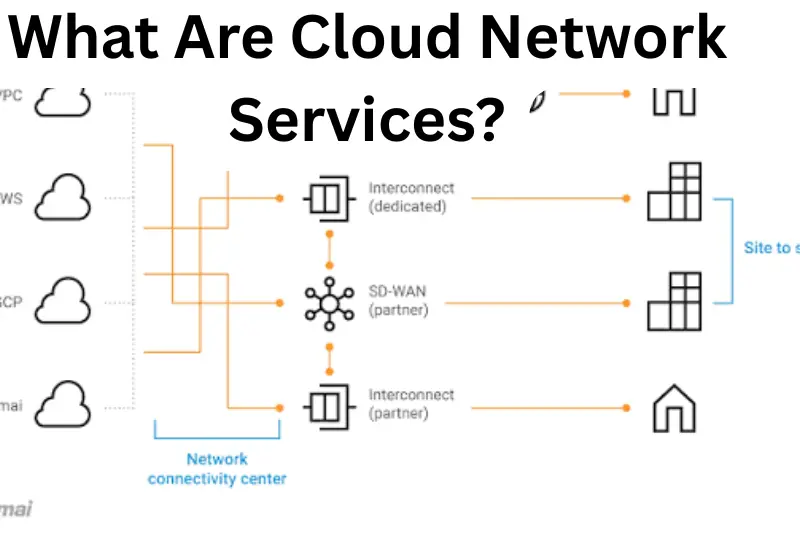
Cloud network services are networking capabilities delivered through cloud infrastructure rather than relying only on physical networking equipment installed at a business location.
They allow organisations to create and manage networks using software-defined resources.
Common capabilities include:
- Virtual private networks
- Cloud DNS
- Load balancing
- Firewalls
- VPN connectivity
- Network gateways
- Private endpoints
- Content delivery
- Traffic routing
- Network monitoring
- Access control
For example, a company could host its application in a cloud environment and create separate virtual networks for its web servers, application servers, and databases. Network policies can determine which systems are allowed to communicate.
This provides significantly more flexibility than manually installing new physical networking equipment every time infrastructure requirements change.
How Do Cloud Network Services Work?
Cloud network services work by virtualising many traditional networking functions and managing them through software, APIs, dashboards, and automated policies.
Instead of configuring only physical routers, switches, and firewalls, administrators can define networking resources digitally.
A Simple Cloud Networking Example
Imagine an Indian e-commerce company running an online store.
Its architecture might include:
Users → DNS → Load Balancer → Web Servers → Application Layer → Database
The DNS system directs customers toward the application.
A load balancer distributes incoming requests among multiple servers.
Firewall rules control permitted traffic.
Private networking can isolate databases from direct public internet access.
Monitoring services then observe network traffic and help administrators identify unusual behaviour or performance problems.
All these components together form part of the organisation’s cloud networking environment.
Major Types of Cloud Network Services
Different cloud networking services solve different problems. Understanding their roles makes architecture planning much easier.
1. Virtual Networks
A virtual network creates an isolated networking environment inside a cloud platform.
Organisations can typically define:
- IP address ranges
- Subnets
- Routing rules
- Security policies
- Private resources
- Internet connectivity
Virtual networks form the foundation of many cloud architectures.
2. Cloud Load Balancing
Load balancing distributes incoming traffic across multiple available resources.
For example, if an application operates on four servers, a load balancer can distribute user requests instead of sending everything to one server.
This can improve scalability and availability.
3. Cloud DNS
The Domain Name System translates human-readable domain names into network addresses.
Cloud-based DNS services can help organisations manage domains and direct traffic toward websites, applications, APIs, and other infrastructure.
4. Cloud Firewalls
Cloud firewalls help control incoming and outgoing network traffic according to defined security policies.
Rules may consider information such as:
- Source
- Destination
- Port
- Protocol
- Application
- Network policy
A firewall should form part of a broader security strategy rather than being treated as the only security layer.
5. VPN and Private Connectivity
VPN connections can securely connect remote employees, offices, or private infrastructure with cloud environments.
Larger organisations may also use dedicated private connectivity instead of routing sensitive or performance-critical traffic entirely over the public internet.
6. Content Delivery Networks
A content delivery network, or CDN, distributes cached content through geographically distributed infrastructure.
When configured appropriately, users can receive content from infrastructure closer to them rather than repeatedly retrieving every resource from the application’s origin server.
This can improve the delivery of images, videos, scripts, stylesheets, downloads, and other static assets.
7. Network Monitoring
Monitoring services provide visibility into traffic, availability, latency, errors, and network behaviour.
Monitoring is important because administrators cannot effectively troubleshoot infrastructure they cannot observe.
Cloud Networking vs Traditional Networking
The fundamental networking concepts remain similar, but cloud environments change how infrastructure is deployed and managed.
| Feature | Cloud Networking | Traditional Networking |
|---|---|---|
| Infrastructure | Primarily virtual/software-defined | Primarily physical hardware |
| Deployment | Often minutes or hours | Can require hardware installation |
| Scaling | Usually flexible | Often hardware dependent |
| Management | Dashboards, APIs and automation | Hardware and management software |
| Pricing | Often usage based | Hardware plus maintenance costs |
| Remote access | Designed for distributed environments | May require additional configuration |
| Automation | Strong automation capabilities | Depends heavily on infrastructure |
Neither approach is automatically superior for every organisation.
Many companies use hybrid networking that combines traditional infrastructure with public or private cloud resources.
Key Benefits of Cloud Network Services
The biggest advantage of cloud networking is flexibility, but businesses can gain several additional benefits when the infrastructure is properly designed.
Faster Infrastructure Deployment
Creating a virtual network or subnet can be much quicker than purchasing, delivering, installing, and configuring new physical networking equipment.
This is valuable for development teams that regularly create new environments.
Easier Scalability
Cloud resources can often be expanded as application demand changes.
An application experiencing higher traffic may use additional computing resources combined with load balancing and automated scaling.
Better Support for Distributed Teams
Businesses with remote employees, multiple offices, contractors, or international teams need secure access to company resources.
Cloud networking technologies can help build controlled connections between those users and applications.
Automation
Modern cloud platforms allow networking resources to be managed through APIs and Infrastructure as Code tools.
This makes repeatable deployments possible and can reduce configuration inconsistencies.
Global Application Delivery
Companies serving customers in different regions can combine cloud regions, CDNs, DNS routing, and load balancing to improve application delivery.
This is especially useful for SaaS products, e-commerce platforms, streaming services, and large websites.
Limitations and Challenges of Cloud Networking
Cloud networking also introduces challenges that should be considered before migration.
Configuration Complexity
A small cloud environment may be easy to understand.
As infrastructure grows across multiple networks, accounts, regions, security policies, and providers, troubleshooting can become much more complicated.
Cost Management
Cloud networking is not automatically inexpensive.
Potential charges can include:
- Data transfer
- NAT gateway usage
- Load balancing
- VPN connections
- Dedicated connections
- Public IP addresses
- Security services
Poorly designed traffic flows can create unnecessary expenses.
Provider Dependency
Using highly specialised networking services from one cloud provider can make future migration more complicated.
Organisations should understand which components are portable and which are closely tied to their chosen platform.
Internet Dependency
Some cloud applications depend heavily on reliable internet connectivity.
Businesses should therefore consider redundancy and backup connectivity for important operations.
Cloud Network Security Best Practices
Cloud network security should follow a layered approach rather than depending on one firewall or security product.
Use Network Segmentation
Separate resources according to their purpose and sensitivity.
For example, public-facing web servers should not necessarily share unrestricted network access with sensitive databases.
Apply Least-Privilege Access
Only permit network connections that are actually required.
If an application server needs database access on one specific port, there may be no reason to permit broad access across multiple ports.
Protect Administrative Access
Administrative interfaces should receive stronger protection than ordinary application traffic.
Measures can include strong authentication, restricted network access, secure identity management, logging, and appropriate multi-factor authentication.
Encrypt Sensitive Traffic
Encryption can protect information moving between users, applications, services, and infrastructure.
TLS is commonly used for web traffic, while VPN or private connectivity technologies can protect other network communications.
Monitor Network Activity
Logging and monitoring can help identify:
- Unexpected connections
- Repeated access failures
- Traffic spikes
- Misconfigured services
- Unusual data transfers
- Availability problems
Security monitoring should be combined with a clear incident-response process.
How to Choose Cloud Network Services
Choosing the right services starts with understanding the application rather than selecting technologies first.
Step 1: Define Your Requirements
Determine what your infrastructure actually needs.
Consider:
- Expected traffic
- Number of users
- Application architecture
- Locations served
- Compliance requirements
- Availability requirements
- Existing infrastructure
Step 2: Map Application Traffic
Understand where information needs to travel.
Map connections between users, web applications, APIs, databases, third-party services, offices, and cloud environments.
Step 3: Design Network Segmentation
Create logical boundaries between public and private resources.
Avoid placing every workload inside one unrestricted network.
Step 4: Plan Security Controls
Define firewall policies, identity controls, encryption requirements, monitoring, and administrative access before production deployment.
Step 5: Estimate Costs
Calculate expected networking expenses rather than looking only at computing and storage prices.
Pay particular attention to data transfer patterns.
Step 6: Test Performance
Measure application behaviour from the geographic regions that matter to your audience.
An Indian business serving customers in Delhi, Mumbai, Bengaluru, Hyderabad, and international locations may experience different latency depending on infrastructure placement.
Step 7: Monitor and Improve
Cloud architecture should not remain unchanged forever.
Review traffic patterns, security events, performance, and spending regularly.
Public, Private and Hybrid Cloud Networking
Cloud networking architecture generally falls into three broad models.
Public Cloud Networking
Networking resources operate within infrastructure managed by a public cloud provider.
This model offers strong scalability and access to a broad collection of managed services.
Private Cloud Networking
A private cloud environment is dedicated to one organisation.
Businesses may choose private infrastructure when they require greater control over infrastructure architecture or have specific operational requirements.
Hybrid Cloud Networking
Hybrid networking connects private or on-premises infrastructure with public cloud environments.
For example, an organisation might keep certain internal systems on its own infrastructure while running customer-facing applications in the public cloud.
Hybrid networking can provide flexibility, but routing, identity, security, and monitoring require careful planning.
Cloud Networking for Businesses in India
Indian organisations should evaluate cloud networking according to their actual customer locations, application requirements, security needs, and budget.
A startup building a SaaS platform may prioritise rapid deployment and scalability.
An e-commerce company may focus more heavily on application availability, CDN performance, security, and handling sudden traffic increases.
A large enterprise may need secure connectivity between offices, data centres, cloud environments, and thousands of employees.
The appropriate architecture therefore depends ashley furniture cloud couch more on the workload than the size of the company alone.
Understanding “Cloud” Search Terms in Different Industries
The word cloud appears across technology, brands, products, automotive searches, furniture, and business names. Search engines therefore rely heavily on context to understand what a user actually wants.
For example, eide chrysler st cloud is an automotive-related search phrase rather than a cloud computing concept. Likewise, ashley furniture cloud couch refers to furniture-related search intent and should not be confused with cloud infrastructure.
A phrase such as pipeline cloud can also carry different meanings depending on context. In technology, a cloud pipeline might describe an automated data, software deployment, or processing workflow hosted through cloud infrastructure.
For SEO professionals, this distinction is important. Similar words do not necessarily represent the same topic or search intent.
Common Cloud Networking Mistakes
Several mistakes can make an otherwise capable cloud environment expensive, insecure, or difficult to manage.
Using overly broad firewall rules: Giving systems unnecessary access increases security exposure.
Ignoring data transfer costs: Applications that constantly move large volumes of information between regions or services may create unexpected charges.
Building one large network: Proper segmentation makes security and management easier.
Skipping monitoring: Without logs and metrics, troubleshooting becomes significantly harder.
Relying on manual configuration: Manual changes become difficult to track as infrastructure grows.
Ignoring disaster recovery: Critical applications should have documented recovery procedures and tested backups.
Choosing services before designing architecture: Start with business and application requirements, then select technologies.
How Cloud Network Services Support Modern Applications
Modern applications frequently consist of many interconnected components rather than one server.
A SaaS application, for example, might use:
DNS → CDN → Load Balancer → Web Tier → API → Application Services → Database
Additional components may include object storage, authentication services, monitoring platforms, message queues, caches, and external APIs.
Cloud networking provides the connectivity and traffic controls that allow these systems to communicate.
For developers, this means networking is not simply an infrastructure concern. Application design, security, reliability, and performance are closely connected to network architecture.
Frequently Asked Questions
What are cloud network services?
Cloud network services are software-defined networking capabilities delivered through cloud infrastructure. They can include virtual networks, DNS, load balancers, firewalls, VPNs, gateways, private connections, content delivery networks, and monitoring. Businesses use these technologies to securely connect applications, users, offices, data centres, and other cloud resources.
Are cloud network services secure?
Cloud networking can support strong security, but security depends heavily on configuration and operational practices. Organisations should use network segmentation, least-privilege access, encryption, strong identity controls, monitoring, secure administrative access, and regular reviews. A cloud provider protects parts of the underlying infrastructure, while customers remain responsible for many configuration and access decisions.
What is the difference between cloud networking and cloud computing?
Cloud computing is the broader delivery of computing resources such as servers, databases, storage, applications, and analytics. Cloud networking focuses specifically on connecting those resources and controlling traffic between them. Virtual networks, DNS, firewalls, gateways, VPNs, and load balancers are common examples of cloud networking technologies.
Can small businesses use cloud networking?
Yes. Small businesses can use cloud networking without owning large amounts of physical networking equipment. A small website might need only basic DNS, virtual networking, security rules, and hosting connectivity. More advanced services can be added as traffic and business requirements grow, allowing infrastructure complexity to increase gradually.
How much do cloud network services cost?
There is no universal price because costs depend on the provider, architecture, location, traffic volume, data transfer, gateways, load balancers, security services, and private connections used. Businesses should model expected traffic before deployment and monitor actual usage afterward. Data transfer patterns deserve particular attention because they can significantly affect networking costs.
Conclusion
Cloud network services provide the networking foundation that connects modern cloud applications, users, databases, offices, APIs, and infrastructure. Core technologies include virtual networks, load balancing, DNS, firewalls, VPNs, private connectivity, CDNs, gateways, and monitoring.
Their main strengths are flexibility, scalability, automation, and support for distributed applications. At the same time, businesses must carefully manage security, architecture complexity, provider dependency, performance, and networking costs.
For organisations planning a cloud project, the practical next step is to map application traffic first. Identify which systems need to communicate, where users are located, which resources must remain private, and what availability level is required. You can then select cloud networking services based on real requirements instead of adding unnecessary infrastructure.
