


Cloud IT is the use of internet-based computing resources such as servers, storage, software, databases, networking, and security tools instead of relying entirely on physical systems located in your home or office. It allows individuals and businesses to access technology resources whenever they need them without maintaining every piece of infrastructure themselves.
For Indian businesses, startups, developers, students, and technology professionals, cloud it computing can provide flexibility, easier collaboration, scalable infrastructure, and access to advanced digital services.
This guide explains how cloud technology works, its major benefits, common service models, security considerations, costs, limitations, and practical ways to adopt it. We will also clarify unrelated searches such as cloud soles and how to lace on cloud shoes, which may appear alongside cloud-related queries but belong to footwear rather than information technology.
What Is Cloud IT?
Cloud IT refers to computing infrastructure and services delivered through remote data centres and accessed through a network, usually the internet.
Instead of purchasing and maintaining all computing resources locally, an organisation can obtain resources from a cloud service provider. Depending on the service, customers may use virtual servers, online storage, managed databases, business applications, development environments, or cybersecurity tools.
For example, a small Indian company might store documents online, host its website on a virtual server, use cloud-based accounting software, and back up important business information without operating its own server room.
How Does Cloud IT Work?
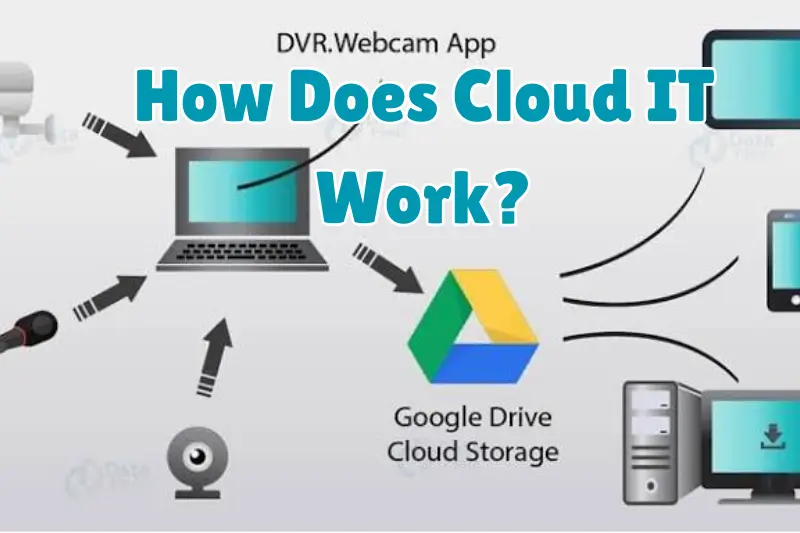
Cloud computing works by combining large-scale physical infrastructure with technologies such as virtualisation, software-defined networking, automation, and distributed storage.
The basic process is straightforward:
- A cloud provider operates computing infrastructure in data centres.
- Physical resources are divided or organised into services available to customers.
- Users connect to these resources through the internet or private network connections.
- Resources can often be increased or reduced according to demand.
- The provider manages portions of the underlying infrastructure depending on the service model.
This approach reduces the need for every organisation to own and operate all its hardware.
Main Types of Cloud IT Services
Cloud services are commonly divided into three major categories: Infrastructure as a Service, Platform as a Service, and Software as a Service.
Infrastructure as a Service (IaaS)
IaaS provides fundamental computing resources such as virtual machines, storage, and networking.
Customers generally manage their operating systems, applications, configurations, and data while the provider operates the underlying physical infrastructure.
It can be useful for website hosting, testing environments, application deployment, backup systems, and workloads requiring flexible computing capacity.
Platform as a Service (PaaS)
PaaS provides an environment where developers can build, test, deploy, and manage applications without handling as much of the underlying infrastructure.
It can simplify development because teams can concentrate more on application code and less on server administration.
Software as a Service (SaaS)
SaaS delivers ready-to-use software over the internet.
Email platforms, online productivity suites, customer relationship management systems, project-management applications, and online collaboration tools are common examples.
Users typically access these applications through a browser or dedicated app while the service provider manages most of the supporting infrastructure.
Key Benefits of Cloud IT
The main advantages of cloud computing include scalability, accessibility, faster deployment, flexible infrastructure, and reduced responsibility for physical hardware.
1. Flexible Scalability
Businesses do not always need the same amount of computing power.
An e-commerce website, for example, might experience higher traffic during Diwali sales or other major shopping periods. Cloud infrastructure can be configured to increase resources when demand grows and reduce them when demand falls.
2. Easier Remote Access
Authorised employees can access many cloud applications and resources from different locations.
This can help distributed teams collaborate on files, projects, customer information, and business systems without requiring everyone to work from one physical office.
3. Faster Deployment
Traditional infrastructure may require purchasing, installing, configuring, and maintaining hardware.
Cloud environments can often provision computing resources much faster, helping developers and businesses test ideas or deploy applications without waiting for new physical equipment.
4. Backup and Recovery Options
Cloud services can support data backups, replication, and disaster-recovery strategies.
However, using cloud infrastructure does not automatically guarantee that information is fully protected. Businesses still need appropriate backup schedules, access controls, recovery procedures, and testing.
5. Flexible Cost Models
Many cloud services use consumption-based or subscription pricing.
This can reduce large upfront hardware purchases, although cloud computing is not automatically cheaper in every situation. Poorly configured or continuously running resources can create unnecessary expenses.
What Are Cloud Based Security Services?
Cloud based security services are cybersecurity capabilities delivered or managed through cloud infrastructure. They help organisations protect applications, users, networks, identities, devices, and information.
Examples can include:
- Identity and access management
- Multi-factor authentication
- Web application protection
- Threat monitoring
- Security logging
- Data encryption tools
- Secure access solutions
- Cloud configuration monitoring
- Backup and recovery protection
The exact responsibilities depend on the provider and service being used.
Why Cloud Security Matters
Moving information to cloud infrastructure does not remove cybersecurity risks.
Weak passwords, excessive permissions, exposed credentials, incorrect storage settings, insecure applications, and poor configuration practices can still create serious vulnerabilities.
A strong cloud security strategy therefore combines technology with policies, monitoring, employee awareness, and regular reviews.
Understanding the Shared Responsibility Model
One important concept in Cloud IT is shared responsibility.
The cloud provider generally protects the underlying infrastructure and physical facilities, while customers remain responsible for other areas depending on the service they purchase.
For example, customers may still need to manage:
- User accounts and permissions
- Sensitive information
- Application security
- Password policies
- Device access
- Resource configuration
- Backup requirements
The exact division differs between IaaS, PaaS, and SaaS products, so organisations should review their provider’s documentation instead of assuming everything is automatically protected.
Public Cloud vs Private Cloud vs Hybrid Cloud
Choosing the right deployment model depends on workload, security, control, budget, and operational requirements.
| Cloud Model | Basic Meaning | Suitable For |
|---|---|---|
| Public Cloud | Shared provider infrastructure delivering isolated customer services | Startups, websites, scalable applications |
| Private Cloud | Cloud environment dedicated to one organisation | Organisations requiring greater infrastructure control |
| Hybrid Cloud | Combination of private/on-premises systems and public cloud resources | Businesses with mixed workloads or migration requirements |
There is no universally best model. A small startup may benefit from public cloud flexibility, while a larger organisation could choose a hybrid approach for specific operational or compliance requirements.
How Indian Businesses Can Start Using Cloud IT
Businesses should begin with a clear requirement rather than migrating systems simply because cloud technology is popular.
Step 1: Review Existing Technology
Identify your current applications, servers, storage systems, databases, backups, security tools, and software subscriptions.
Determine which systems are critical and which could realistically move to a cloud environment.
Step 2: Define Your Goal
Your objective might be to improve scalability, support remote employees, host a new application, simplify backups, or reduce infrastructure management.
A clear goal makes service selection easier.
Step 3: Evaluate Security Requirements
Consider what information will be stored and processed.
Review access controls, encryption options, backup requirements, security monitoring, regulatory obligations, and provider responsibilities before moving sensitive workloads.
Step 4: Compare Pricing Carefully
Do not compare cloud platforms using only their advertised starting prices.
Consider storage, computing time, database usage, network transfer, support plans, backups, monitoring, and additional services.
Step 5: Start With a Manageable Workload
A gradual migration can reduce unnecessary disruption.
For example, a company could begin with backups, collaboration software, a test environment, or a non-critical website before migrating important production systems.
Step 6: Monitor and Optimise
Cloud resources should be reviewed regularly.
Remove unused resources, monitor spending, review permissions, install necessary updates, examine security alerts, and adjust capacity according to actual demand.
Common Cloud IT Mistakes to Avoid
One common mistake is assuming the provider handles every aspect of security. Cloud environments still require careful configuration and account management.
Other mistakes include:
- Giving users unnecessary administrator privileges
- Leaving unused resources active
- Failing to monitor cloud spending
- Using weak authentication practices
- Ignoring backup testing
- Moving workloads without planning
- Failing to understand provider responsibilities
- Choosing services only because they are inexpensive
Regular audits can help identify these issues before they become larger operational or security problems.
Cloud Soles and Cloud Technology: Are They Related?
Cloud soles generally refers to footwear-related searches rather than Cloud IT.
The word “cloud” is used across many unrelated industries because it can suggest softness, comfort, online computing, storage, or even a product name. Search engines determine meaning partly from the words surrounding the query.
For example, someone searching for cloud infrastructure is likely interested in computing, while a person searching for cloud soles is probably looking for shoes, insoles, or footwear information.
Understanding this difference is important for SEO because similar words do not necessarily share the same search intent.
How to Lace On Cloud Shoes
People searching how to lace on cloud shoes are looking for footwear instructions, not cloud computing information.
For most lace-up athletic shoes, the general approach is to feed the laces evenly through the lower eyelets and continue upward while maintaining comfortable, balanced tension. The exact method can vary by shoe model and the wearer’s preferred fit.
For model-specific instructions, checking the footwear manufacturer’s official guidance is better than following unrelated cloud-computing content.
From an SEO perspective, this example demonstrates why search intent matters. A keyword containing “cloud” should not automatically be treated as a technology keyword.
Cloud IT Security Best Practices
Good cloud security requires continuous management rather than a one-time setup.
Businesses should focus on a few core practices:
- Enable multi-factor authentication where available.
- Apply least-privilege access principles.
- Encrypt sensitive information where appropriate.
- Keep applications and systems updated.
- Monitor login activity and security alerts.
- Maintain reliable backups.
- Remove inactive accounts promptly.
- Review permissions regularly.
- Document important cloud configurations.
- Create an incident-response process.
These measures can strengthen security whether an organisation uses public, private, or hybrid infrastructure.
Limitations of Cloud IT
Cloud computing provides significant flexibility, but it also has limitations.
Internet and Network Dependence
Many cloud services require reliable connectivity. Network problems can affect access to online systems.
Ongoing Costs
Usage-based pricing is flexible, but poorly managed infrastructure can become expensive.
Provider Dependence
Applications built heavily around one provider’s specialised services may become difficult or costly to move elsewhere.
Security Misconfiguration
Cloud platforms offer powerful security controls, but incorrect settings can expose resources.
Migration Complexity
Moving older applications can require changes to architecture, databases, security policies, or software dependencies.
Businesses should evaluate these limitations alongside potential benefits.
Frequently Asked Questions
What does Cloud IT mean?
Cloud IT means delivering or using computing resources such as servers, storage, databases, networking, software, and security services through remote infrastructure. Instead of maintaining every system locally, businesses can obtain resources from cloud providers and access them through internet or private network connections.
Is cloud computing useful for small businesses in India?
Yes. Small businesses can use cloud computing for website hosting, online collaboration, backups, business applications, data storage, and development environments. The right choice depends on budget, internet reliability, security requirements, and workload. Businesses should compare total costs and responsibilities before adopting a service.
Are cloud based security services completely secure?
No technology can guarantee complete security. Cloud based security services can provide strong protection, monitoring, authentication, and threat-management capabilities, but customers still need secure configurations, appropriate permissions, strong authentication, updates, backups, and employee awareness. Security is an ongoing process shared between providers and customers.
What is the difference between cloud storage and Cloud IT?
Cloud storage specifically focuses on storing and retrieving data through remote infrastructure. Cloud IT is much broader. It can include cloud storage as well as virtual servers, databases, software applications, development platforms, networking, analytics, cybersecurity, automation, and other computing resources.
How can a beginner start learning Cloud IT?
Start by understanding basic concepts such as servers, networking, storage, databases, virtualisation, SaaS, PaaS, and IaaS. Then practise with beginner-friendly cloud environments and simple projects. Learning identity management, backups, security permissions, monitoring, and cost management alongside technical deployment will build more practical cloud skills.
Conclusion
Cloud IT gives individuals and organisations a flexible way to access computing infrastructure, software, storage, databases, networking, and security capabilities without operating every physical resource themselves.
For Indian businesses, the most effective approach is to identify a genuine business requirement, compare suitable cloud models, understand security responsibilities, estimate total costs, and begin with a manageable workload.
Cloud technology can improve scalability, collaboration, deployment speed, and infrastructure flexibility, but successful adoption requires proper planning, security, monitoring, and cost management.
Your practical next step is to list the applications and data your organisation currently uses, identify one low-risk workload that could benefit from cloud infrastructure, and evaluate its cost, security, backup, and access requirements before migration
