

Prevention Cloud refers to a proactive approach to protecting cloud-based systems, applications, networks, and data before security threats can cause significant damage. Rather than waiting for an incident to happen, prevention-focused cloud security combines monitoring, access controls, threat detection, data protection, and security policies to reduce risk. Modern cloud security platforms can use cloud-based analysis, machine learning, and other detection technologies to identify suspicious activity and block threats.
For organizations moving business applications and sensitive information to cloud environments, prevention is an important part of an effective cybersecurity strategy. This guide explains what Prevention Cloud means, how it works, the role of cloud security services, why continuous monitoring matters, and how organizations can build a stronger cloud protection strategy.
What Is Prevention Cloud?
Prevention Cloud is a security approach focused on stopping cloud threats before they become serious security incidents. It combines preventive controls with continuous detection and monitoring to protect cloud workloads, applications, identities, networks, and data.
Cloud environments can contain many connected services, users, applications, APIs, and storage resources. Because of this complexity, security cannot depend on a single firewall or one security tool. A prevention-focused strategy uses multiple layers of protection.
Why Is Cloud Prevention Important?
Cloud environments can face risks such as:
- Unauthorized access
- Malware
- Data exposure
- Misconfigured resources
- Vulnerability exploitation
- Account compromise
- Unsafe APIs
- Excessive permissions
- Data loss
Misconfiguration and weak access controls can expose cloud resources, while sophisticated threats may attempt to exploit vulnerabilities or compromise legitimate accounts. Strong preventive controls can reduce these risks before they develop into larger incidents.
How Does Prevention Cloud Work?
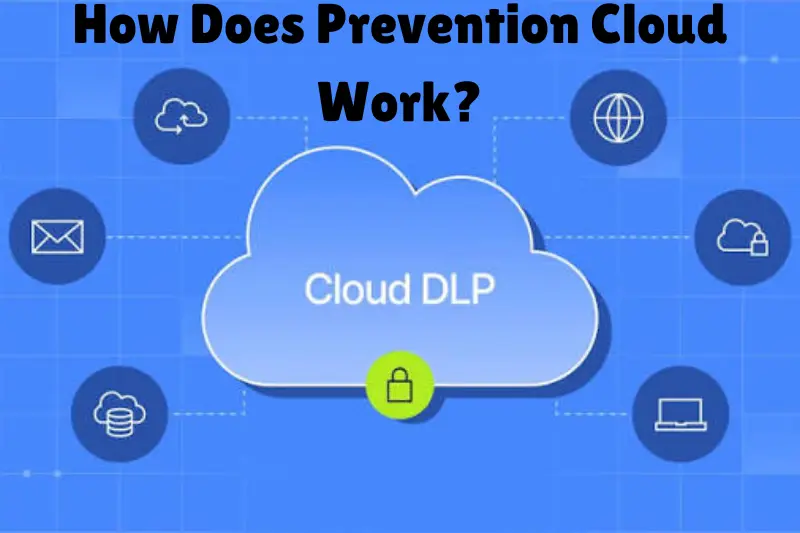
A prevention-focused cloud security model generally works through several connected layers.
1. Identify Cloud Assets
Organizations first need visibility into the resources they operate. This can include virtual machines, containers, databases, storage systems, applications, APIs, and user accounts.
Without knowing what exists in a cloud environment, security teams may struggle to protect forgotten or incorrectly configured resources.
2. Control Access
Identity and access management helps ensure that users receive only the permissions they need.
Multi-factor authentication, role-based access control, strong passwords, and regular permission reviews can reduce the possibility of unauthorized access.
3. Monitor Activity
Continuous monitoring helps security teams identify unusual activity. Examples can include unexpected login locations, unusual data transfers, suspicious application behavior, or changes to security configurations.
Monitoring becomes particularly valuable when cloud environments are large and constantly changing.
4. Detect and Block Threats
Modern cloud security solutions can combine threat intelligence, signatures, behavioral analysis, machine learning, and other techniques to identify malicious activity.
For example, Palo Alto Networks describes cloud-based Advanced Threat Prevention capabilities that use machine-learning and deep-learning analysis to detect certain unknown and evasive threats in real time.
The Role of Cloud Security Services
Cloud security services provide technologies and professional capabilities designed to protect cloud environments.
Depending on an organization’s requirements, these services can include:
- Cloud security posture management
- Identity and access management
- Data loss prevention
- Cloud workload protection
- Web application security
- Network security
- Threat detection
- Security monitoring
- Compliance support
- Incident response
Cloud security services are particularly useful when an organization operates multiple cloud workloads or lacks the internal resources to continuously monitor its environment.
A strong strategy should not focus only on detecting attacks. It should also identify misconfigurations, excessive permissions, vulnerable workloads, and other weaknesses that attackers could exploit.
Key Benefits of Prevention Cloud
A prevention-focused security strategy can provide several benefits.
Reduced Security Risk
Preventive controls can reduce opportunities for attackers to gain unauthorized access or exploit weaknesses.
Better Visibility
Continuous monitoring gives security teams greater visibility into cloud activity and configuration changes.
Faster Threat Response
When detection and prevention mechanisms work together, suspicious activity can potentially be identified and blocked earlier.
Protection for Sensitive Data
Data protection controls can help prevent unauthorized access, accidental exposure, and inappropriate movement of sensitive information.
Cloud DLP solutions, for example, can monitor sensitive information across cloud applications and enforce policies designed to prevent data leakage.
Support for Compliance
Organizations operating with regulated information may need controls covering data access, storage, sharing, encryption, and monitoring. Cloud security tools can support these requirements, although specific compliance obligations depend on the organization and its jurisdiction.
Prevention Cloud and Data Protection
Data is one of the most valuable assets stored in modern cloud environments. A prevention strategy therefore needs to protect data throughout its lifecycle.
Encryption can help protect information while it is stored and transmitted. Access controls determine who can interact with the information, while data loss prevention policies can monitor how sensitive information is used or transferred.
For example, DLP systems can identify sensitive information and apply policies to activities involving cloud applications, email, and web services.
Organizations should also maintain clear policies for data retention, sharing, backups, and access permissions.
What Does Cloud Health Mean?
Cloud health generally refers to the overall condition, security, performance, reliability, and configuration of a cloud environment.
A healthy cloud environment should be monitored regularly rather than checked only after a problem occurs.
Cloud health assessments may consider:
- Security configuration
- System availability
- Performance
- Resource utilization
- Access permissions
- Vulnerabilities
- Compliance requirements
- Backup status
- Network configuration
Monitoring cloud health can help organizations discover problems before they become major operational or security issues.
How to Improve Cloud Health
A practical approach includes:
- Review cloud configurations regularly.
- Remove unnecessary accounts and permissions.
- Monitor important workloads.
- Keep systems and applications updated.
- Review security alerts.
- Test backup and recovery procedures.
- Document important cloud resources.
- Investigate unusual activity promptly.
Cloud health and security should be treated as ongoing processes rather than one-time projects.
What About Cloud Flowers?
The phrase cloud flowers does not normally describe a recognized cloud cybersecurity technology or security control. In a security-focused article, it may appear as an unrelated search phrase or keyword.
For that reason, organizations should avoid confusing the term with established concepts such as cloud security, cloud monitoring, cloud workload protection, or cloud data loss prevention.
If “cloud flowers” is being used for a separate business, product, website, or creative topic, its meaning should be determined from the relevant context rather than assumed to be a cybersecurity concept.
Prevention Cloud vs. Traditional Security
Traditional security approaches often rely heavily on fixed network boundaries and perimeter controls. Cloud environments are more distributed, with users, applications, services, APIs, and workloads potentially operating across different locations.
| Feature | Prevention Cloud Approach | Traditional Perimeter Approach |
|---|---|---|
| Main focus | Proactive cloud protection | Network boundary protection |
| Environment | Cloud and distributed systems | Primarily fixed infrastructure |
| Monitoring | Continuous | Often network-focused |
| Identity | Central security component | May be less central |
| Workloads | Cloud-native workloads | Traditional servers |
| Scalability | Designed for changing cloud resources | Can require additional infrastructure |
Modern cloud security does not necessarily replace traditional controls. Instead, organizations often combine network, identity, application, workload, and data protections.
Common Mistakes in Cloud Security
One major mistake is assuming that moving information to a reputable cloud provider automatically makes the entire environment secure. Cloud providers secure their underlying infrastructure, but customers generally remain responsible for securing many aspects of their own configurations and workloads.
Another mistake is giving users excessive permissions. Access should follow the principle of least privilege, meaning users receive only the access required for their responsibilities.
Ignoring monitoring is another problem. Even strong preventive controls need visibility so teams can identify unexpected behavior and investigate security events.
Finally, organizations should not treat security as a one-time setup. Cloud environments change continuously, so security controls need regular review.
How to Build a Prevention-Focused Cloud Strategy
Organizations can approach cloud security through a structured process.
Step 1: Create Visibility
Identify cloud accounts, applications, workloads, data stores, users, and APIs.
Step 2: Assess Risk
Determine which resources contain sensitive information and which systems are most important to business operations.
Step 3: Strengthen Access Controls
Use appropriate authentication, authorization, MFA, and least-privilege access.
Step 4: Monitor Continuously
Track configuration changes, authentication events, network activity, and important application behavior.
Step 5: Protect Data
Use encryption, DLP policies, secure backups, and appropriate access restrictions.
Step 6: Test the Strategy
Regularly review security controls and test incident-response and recovery procedures.
Learn more about cloud security and data protection to better understand how modern cloud environments can be secured.
Frequently Asked Questions
What is Prevention Cloud?
Prevention Cloud describes a proactive approach to cloud security that focuses on preventing threats before they cause significant damage. It can combine access controls, threat detection, monitoring, data protection, vulnerability management, and security policies. The exact technologies used depend on the organization’s cloud architecture and security requirements.
Why are cloud security services important?
Cloud security services help organizations protect applications, data, workloads, identities, and infrastructure operating in cloud environments. They can provide capabilities such as monitoring, threat detection, access management, data protection, vulnerability assessment, and compliance support. The appropriate services depend on the organization’s size, cloud architecture, risks, and regulatory obligations.
What does cloud health mean?
Cloud health describes the overall security, performance, reliability, configuration, and operational condition of a cloud environment. Maintaining good cloud health involves regular monitoring, configuration reviews, access management, vulnerability management, backup testing, and performance checks. A healthy cloud environment should be reviewed continuously as resources and workloads change.
Can Prevention Cloud stop every cyberattack?
No security approach can guarantee that every cyberattack will be stopped. Prevention-focused cloud security can reduce risk by combining multiple protective and detection controls, but organizations still need monitoring, incident response, backups, recovery plans, and regular security assessments. Effective cybersecurity is based on reducing risk and improving resilience rather than promising absolute protection.
Is cloud security only about protecting data?
No. Cloud security covers much more than data. It can include identities, applications, APIs, networks, virtual machines, containers, configurations, workloads, and access permissions. Data protection is an important component, but a comprehensive cloud security strategy should consider the entire environment and how its different components interact.
Conclusion
Prevention Cloud represents a proactive approach to protecting cloud environments through layered security controls, continuous monitoring, access management, threat prevention, and data protection. Instead of waiting for an attack to cause damage, organizations can identify weaknesses and suspicious activity earlier and take action to reduce risk.
Cloud security services can support this strategy by providing specialized tools for threat detection, workload protection, data loss prevention, posture management, and access control. At the same time, maintaining good cloud health requires regular assessments, secure configurations, appropriate permissions, monitoring, and recovery planning.
The most practical next step is to assess your current cloud environment, identify its most important assets and risks, review access permissions, and establish continuous monitoring. A prevention-first mindset can help organizations build a more secure and resilient cloud environment.
